Ventilator, Adult
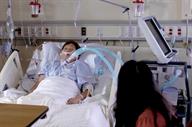
A ventilator is a machine that helps you breathe by moving air in and out of your lungs. This machine may also be called a breathing machine, respirator, or mechanical ventilator. The ventilator connects to a tube that is placed in your mouth or nose and is passed into your windpipe (trachea). Sometimes, an incision is made in the throat and the breathing tube is inserted directly into the windpipe (tracheostomy). The tube delivers warm, moist, oxygen-rich air to the lungs and carries away waste gases, such as carbon dioxide.
A ventilator may be needed during or after surgery if you have general anesthesia to make you fall asleep. It may also be needed if you have:
A chest injury.
Lung or other infections.
A brain or spinal cord injury.
Low oxygen levels (hypoxemia) or high carbon dioxide levels (hypercapnia) in your blood.
Slow breathing (apnea) or fast breathing (tachypnea).
A ventilator can be used in the operating room, intensive care unit (ICU), rehabilitation unit, ambulance, and at home. It is sometimes called life support.
What can I expect while on a ventilator?
-
The ventilator is set to control each breath and how often breaths occur. The settings are based on how a person normally breathes.
-
The ventilator pushes air into the lungs.
-
Ventilators are powered by electricity and have a backup power source in case a power outage occurs.
-
Ventilators have alarms that may go off. The alarms help the health care team make sure that all connections are secure and that the ventilator is working properly.
-
Blood work, certain devices, and other tests may be used to monitor your condition and the ventilator settings.
-
You will not be able to talk while you are on the ventilator. Writing or picture boards can help you communicate with others.
- To make you more comfortable, you may be given medicine to help you rest (sedatives) and pain medicines while on the ventilator.
What are the risks of being on a ventilator?
If you need a ventilator, you may be at risk for certain complications, such as:
Pneumonia. If this infection develops while you are on a ventilator, it is called ventilator-associated pneumonia (VAP).
Sinus infection.
Air leakage into the space between the lungs and the chest wall (pneumothorax).
Blood clots and skin infections.
Damage to vocal cords.
Damage to the lungs.
Depression and trouble thinking clearly (ICU-induced delirium or post-intensive care syndrome).
After being on a ventilator, you may have:
Coughing.
A sore throat.
A hoarse voice.
What can be done to prevent problems while on a ventilator?
What hospitals are doing
To prevent VAP, the health care team may:
Keep the head of your bed raised between a 30- and 45-degree angle.
- Check every day to see if you can breathe on your own (breathing trial) and how well you breathe. This is also called weaning.
Wash their hands regularly with soap and water. They may use alcohol-based hand sanitizer if soap and water are unavailable.
Clean the inside of your mouth. Good oral care is important to prevent infection.
Make sure equipment is cleaned or replaced from one patient to another.
People who end up developing an infection are usually treated with antibiotic medicines.
What you can do
Summary
-
A ventilator is a machine that helps you breathe by moving air in and out of your lungs.
-
The ventilator is set to control each breath and how often breaths occur. The settings are based on how a person normally breathes.
-
The health care team will check every day to see if you can breathe on your own and how well you breathe.
-
After being on a ventilator, you may have coughing, a sore throat, and a hoarse voice.
-
If you need a ventilator, you may be at risk for certain complications, such as ventilator-associated pneumonia (VAP), blood clots, and damage to the lungs or vocal cords.
This information is not intended to replace advice given to you by your health care provider. Make sure you discuss any questions you have with your health care provider.

