Ventilator Use in Children: What to Know
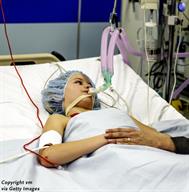
A ventilator is a machine that helps move air in and out of the lungs. This machine may also be called a breathing machine or life support.
A ventilator may be used to help your child breathe. And it may completely control their breathing.
When is a ventilator used?
A ventilator may be used:
How does a ventilator work?
The ventilator connects to a breathing tube that's placed in your child's mouth or nose and is passed into their windpipe (trachea). It uses pressure to deliver warm, moist, oxygen-rich air to the lungs. It then helps your child to breathe out, removing waste gases, such as carbon dioxide.
How do I know if my child is getting enough air?
-
Ventilators have settings to control how often and how deeply your child breathes.
-
A display screen allows the caregivers to check the ventilator settings.
-
A device called a pulse oximeter may be used to track your child's blood oxygen level. The monitor is placed on the fingertip, toe, or earlobe.
- Tests may be done to:
What are the risks of being on a ventilator?
Depending on how long your child is on the ventilator, there may be an increased risk for:
Lung infection (pneumonia).
Sinus infection.
Air leakage into the space between the lungs and the chest wall.
Blood clots.
Damage to the skin or teeth.
Damage to vocal cords.
Damage to the lungs.
What happens when my child comes off a ventilator?
When your child can breathe on their own again, they'll be given a breathing trial. This is also called weaning.
During this trial, the ventilator is turned off or the settings are turned down for a certain amount of time while your child is still attached to the machine.
If your child can breathe well on their own, the breathing tube is removed.
If your child cannot breathe without the ventilator, the machine will be turned back on and weaning will be tried again later.
The decision to wean your child from the ventilator is made carefully to make sure that the breathing tube is not removed too soon.
After being on a ventilator, your child may have:
Follow these instructions at home:
If your child goes home with a ventilator:
- Make sure you're fully trained on how to care for your child before leaving the hospital. You'll be trained on:
Ask your child's providers to guide you on how to care for your child. Do not be afraid to ask questions.
- You may need another trained person to help you care for your child while they're on a ventilator.
Do not leave your child alone. Children who are on ventilators must have an awake and fully trained caregiver with them at all times.
Contact your provider right away if you see any problems with your child's breathing tube, such as a blockage.
- If your child has an opening in their throat (tracheostomy),care for the opening as told by the provider.
Keep all follow-up visits. Your child's provider will want to check your child's health and breathing often.
This information is not intended to replace advice given to you by your health care provider. Make sure you discuss any questions you have with your health care provider.

